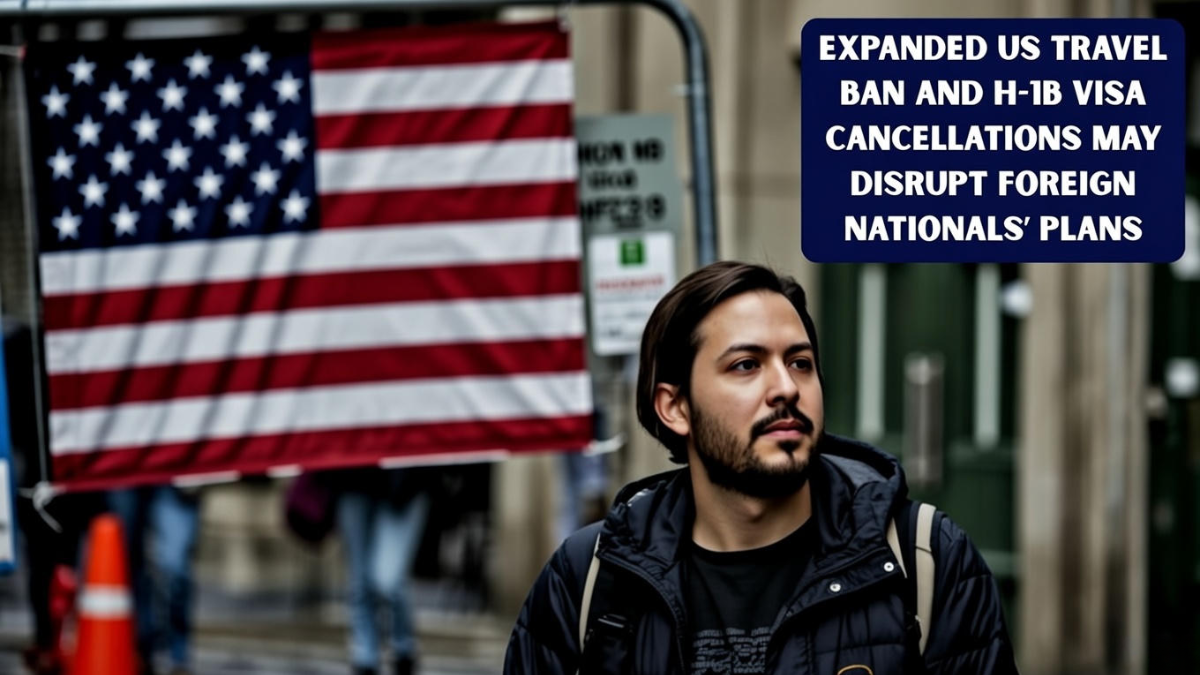
Foreign nationals planning to travel to or work in the United States are facing growing uncertainty as the U.S. government moves forward with an expanded travel ban and widespread H-1B and H-4 visa appointment cancellations. These changes are already disrupting travel schedules, employment plans, and family reunifications, particularly for skilled professionals and international workers who rely on timely visa processing.
While the policies are framed around national security and enhanced vetting, their practical impact is being felt across industries, universities, and global workforces. Understanding what is changing, who is affected, and how to prepare has become essential for anyone with U.S. immigration plans.
What the Expanded US Travel Ban Involves
The expanded travel restrictions are part of a broader effort by the U.S. government to tighten entry rules for certain foreign nationals. Under the updated framework, visa issuance and entry into the United States may be suspended or delayed for nationals of specific countries, particularly those deemed higher risk under security reviews.
The policy primarily affects individuals outside the United States who do not already hold a valid U.S. visa at the time the restrictions apply. While existing visas are not automatically revoked, new visa issuance can be paused or subjected to additional scrutiny. The travel ban is implemented through executive authority and enforced by agencies such as the U.S. Department of State and Department of Homeland Security.

H-1B and H-4 Visa Appointment Cancellations Explained
Alongside the expanded travel ban, U.S. embassies and consulates have begun cancelling or postponing H-1B and H-4 visa appointments worldwide. These cancellations affect both first-time applicants and individuals seeking visa stamping or renewal after traveling abroad.
The primary reason behind these cancellations is the introduction of enhanced vetting procedures, including deeper background checks and expanded review of applicants’ digital and social media presence. While these checks are intended to strengthen screening, they have significantly slowed down visa processing and reduced the number of available interview slots.
Why These Changes Are Causing Major Disruptions
The combination of stricter travel restrictions and visa appointment backlogs has created a bottleneck in the U.S. immigration system. Many foreign nationals who traveled abroad expecting routine visa renewals are now facing months-long delays with no clear timeline for return.
For H-1B professionals, this can mean being unable to return to U.S. jobs, risking unpaid leave, employment termination, or loss of immigration status. Families on H-4 visas face prolonged separation, adding emotional and financial strain.
Who Is Most Affected by the New Rules
The impact of these changes is not evenly distributed. Certain groups are facing higher levels of disruption than others.
Foreign professionals on H-1B visas, especially in technology, engineering, healthcare, and research roles, are among the most affected. Dependents on H-4 visas are also impacted due to cancelled family appointments. Students transitioning from F-1 to H-1B status and applicants from countries covered under the expanded travel restrictions face heightened uncertainty. Employers that rely heavily on global talent are experiencing workforce instability as key employees remain stranded abroad.
Corporate Travel Warnings and Employer Concerns
Large multinational companies have reportedly issued internal advisories urging visa-holding employees to avoid non-essential international travel. The concern is that employees who leave the U.S. may not be able to return in time due to appointment delays or new entry restrictions.
For employers, this situation complicates workforce planning, project timelines, and compliance obligations. Businesses dependent on specialized foreign talent are now reassessing international travel policies and contingency plans.
How Visa Holders Can Reduce Risk
Foreign nationals currently in the U.S. should carefully evaluate any travel plans. Leaving the country without a valid visa stamp or confirmed appointment could result in prolonged stays abroad.
Those outside the U.S. should regularly monitor appointment availability and official updates from the U.S. Citizenship and Immigration Services and the State Department. Keeping documentation updated and consulting with immigration counsel before making travel decisions is strongly advised.
Legal and Policy Background
The expanded travel ban and visa cancellations are part of a broader shift toward more restrictive immigration enforcement and heightened screening standards. These measures are implemented through executive actions and administrative policies rather than legislative changes, allowing for rapid implementation with limited notice.
While the government maintains that these steps enhance national security, immigration advocates and business groups have raised concerns about economic impact, workforce shortages, and damage to the U.S.’s global competitiveness.
What Foreign Nationals Should Expect Next
In the short term, visa processing delays and travel uncertainty are likely to continue. Appointment backlogs may extend well into the next year, and additional countries or visa categories could be affected as policies evolve.
Foreign nationals should expect longer processing times, increased documentation requests, and stricter scrutiny during visa interviews. Staying informed through official government channels is critical, as policy adjustments may occur with little advance warning.
Conclusion
The expanded U.S. travel ban and ongoing H-1B visa cancellations are creating serious challenges for foreign nationals, employers, and families alike. With heightened vetting, limited appointment availability, and evolving entry restrictions, even routine travel now carries significant risk. Until clearer guidance and processing stability return, careful planning, constant monitoring of official updates, and professional immigration advice remain the best tools for navigating this uncertain landscape.
Disclaimer
This article is for informational purposes only and does not constitute legal or immigration advice. Immigration rules and policies can change at any time. Always consult official U.S. government sources or a qualified immigration professional for guidance specific to your situation.