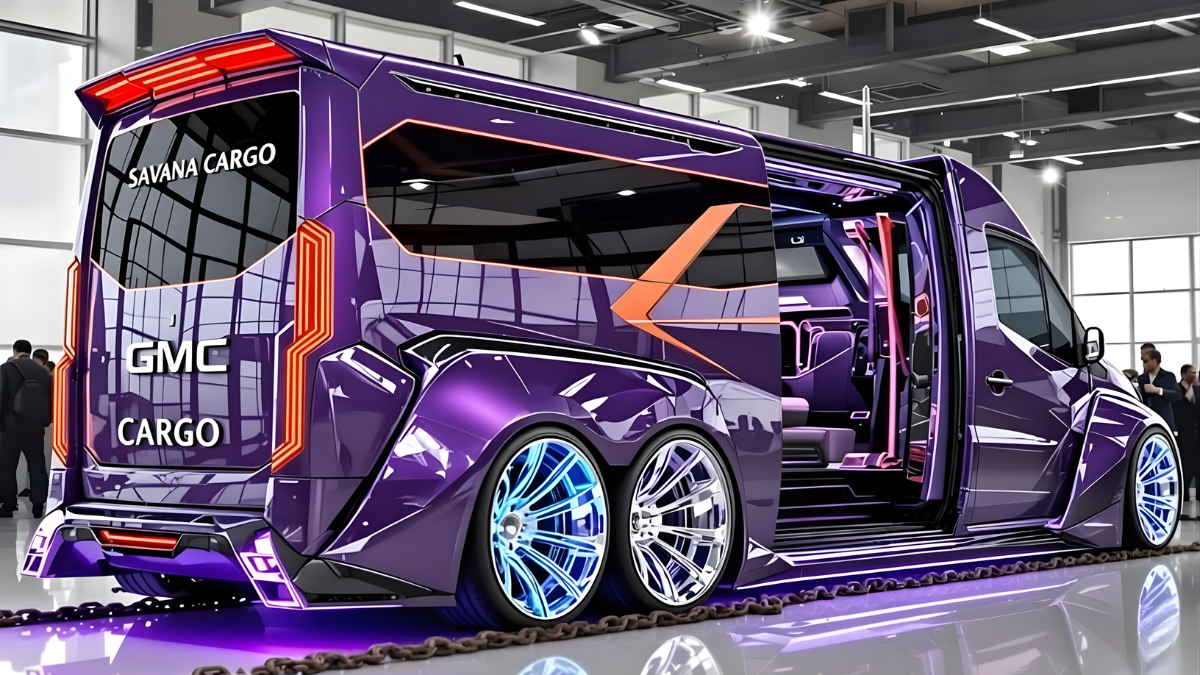
For decades, the Savana Cargo has been one of the most dependable tools in the commercial vehicle world. It has never tried to be flashy, and that’s exactly why businesses trust it. The 2026 GMC Savana Cargo Concept shows that GMC isn’t abandoning that legacy. Instead, it’s refining it. This concept focuses on smarter ergonomics, improved usability, and modern expectations while keeping the rugged, no-nonsense character that contractors, fleet owners, and delivery operators rely on every day.
This is not a radical reinvention. It is a careful evolution aimed at making daily work easier, more comfortable, and more efficient.
Design Philosophy Focused on Function First
The exterior design of the 2026 Savana Cargo Concept stays true to its utilitarian roots. The familiar boxy profile remains because it works. It maximizes interior volume, simplifies upfitting, and makes the van easy to maneuver in tight job sites and city streets.
What changes is the refinement. Body panels appear cleaner and more purposeful, reducing unnecessary visual clutter while improving durability. Updated lighting elements improve visibility during early-morning starts and late-night deliveries. The overall look feels more professional and modern without sacrificing the tough appearance expected from a full-size cargo van.
This design approach signals that GMC understands its audience. Work vehicles don’t need dramatic styling. They need to look reliable and capable.

Built to Handle Real-World Abuse
Every surface on the Savana Cargo Concept is designed with durability in mind. Exterior finishes are intended to resist dents, scratches, and daily wear from demanding environments. Practical details such as wide-opening rear doors, optional sliding side access, and reinforced entry points support frequent loading and unloading.
Roof rails and auxiliary mounting options expand the van’s versatility for ladders, racks, and specialized equipment. This is a vehicle designed to be modified and customized, not protected like a showroom display.
Interior Designed for Long Workdays
Inside, the Savana Cargo Concept shows some of its most meaningful improvements. GMC focuses heavily on ergonomics, acknowledging that drivers often spend long hours behind the wheel. The dashboard layout is simplified, with controls placed where they are easier to reach and understand at a glance.
Materials are intentionally rugged. Floors, panels, and cargo surfaces are built to be easy to clean and resistant to damage. This is not an interior meant to impress passengers. It is meant to survive years of heavy use.
Front seats are redesigned for better support, helping reduce fatigue during long routes. Optional crew seating configurations allow businesses to transport both people and equipment efficiently.

Cargo Space That Remains the Star
Cargo capacity remains the Savana’s strongest selling point. The long-wheelbase configuration continues to offer massive interior volume, making it suitable for everything from delivery operations to mobile workshops.
A flat cargo floor simplifies loading, while strategically placed tie-down points allow operators to secure tools and goods quickly. Interior lighting improvements make it easier to work inside the van during low-light conditions, a small upgrade that can make a big difference on the job.
One focused snapshot highlights its work-ready appeal:
- Massive cargo volume, flat load floor, wide door openings, durable interior materials, and flexible upfitting options built for real businesses.
Proven Powertrains With No Surprises
GMC’s approach to power remains conservative and intentional. The Savana Cargo Concept is expected to carry forward the same trusted engine options that have proven themselves in commercial use.
The standard V6 provides a solid balance of power and reliability for everyday hauling. For heavier workloads, the available V8 delivers substantial torque, making towing and fully loaded driving far less stressful. These engines are paired with automatic transmissions tuned for durability rather than sporty performance.

This is not about innovation for innovation’s sake. It is about uptime, longevity, and predictable operation.
Driving Experience Tuned for Stability and Control
Despite its size, the Savana Cargo is engineered to feel stable and controlled on the road. Suspension tuning prioritizes load management, ensuring that the van remains composed whether empty or fully loaded.
Steering is calibrated for predictability rather than sharpness, which suits commercial driving needs. Braking systems are designed to handle weight confidently, an essential trait for urban stop-and-go routes and highway travel alike.
The concept suggests subtle refinements rather than dramatic changes, keeping the driving experience familiar for existing Savana users.
Technology That Supports Work, Not Distraction
Technology in the Savana Cargo Concept remains practical and focused. Instead of large consumer-style touchscreens, GMC emphasizes tools that help drivers do their jobs better.

A rear-view camera improves safety when backing into loading docks or tight alleys. Connectivity systems allow hands-free communication and basic infotainment without pulling attention away from driving. Fleet-focused services enable vehicle monitoring, maintenance tracking, and remote diagnostics, features that are increasingly important for modern businesses.
This approach keeps the van functional and efficient rather than overcomplicated.
Safety Built Around Real-World Scenarios
Safety systems in the Savana Cargo Concept reflect its commercial role. Standard airbags, stability control, and traction management form the foundation. Visibility improvements, better mirror positioning, and camera assistance enhance confidence during daily operation.
While it does not chase advanced driver assistance trends seen in passenger vehicles, the Savana focuses on safety features that matter most in work environments. Hill-start assist, load stability support, and predictable braking all contribute to safer operation under heavy use.
What Businesses Can Expect From the Production Model
When the 2026 Savana Cargo reaches production, businesses should expect continuity rather than disruption. GMC appears committed to preserving what works while improving comfort, usability, and efficiency around the edges.

The concept suggests a van that feels familiar on day one but becomes easier to live with over time. Better ergonomics, smarter storage, and refined details aim to reduce driver fatigue and increase productivity without raising complexity.
Conclusion
The 2026 GMC Savana Cargo Concept proves that evolution can be just as powerful as reinvention. By refining design, improving ergonomics, and maintaining proven powertrains, GMC reinforces the Savana’s position as a dependable commercial partner. This is a concept built for people who use their vehicles as tools, not accessories. For businesses that value reliability, adaptability, and long-term durability, the next-generation Savana Cargo looks ready to keep working just as hard as ever.
Disclaimer: This article is based on concept information and early previews. Final specifications, features, and availability may vary when the production model is officially released.