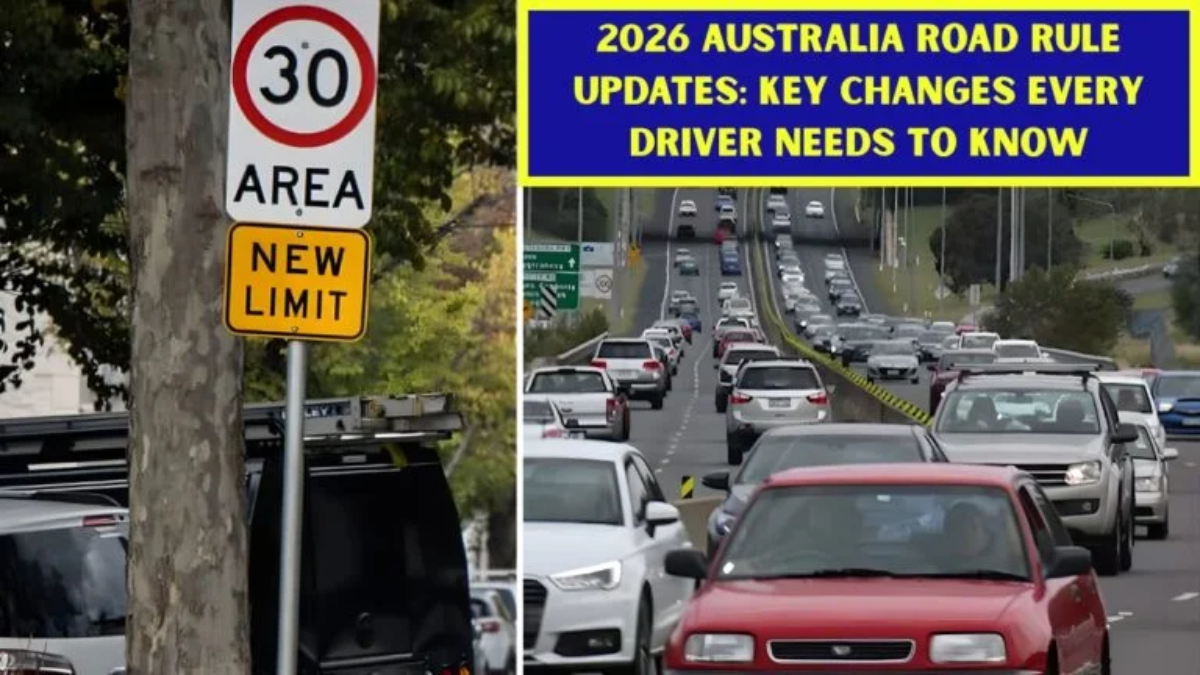
Australian drivers are entering 2026 facing some of the most far-reaching road rule updates in years. Governments across states and territories are tightening driving laws, increasing fines, and expanding technology-based enforcement in response to ongoing road safety concerns. While individual rules may vary slightly by state, the overall message is consistent nationwide: stricter compliance, heavier penalties, and far less tolerance for risky driving behaviour.
Understanding these changes early is essential for protecting your licence, avoiding unexpected fines, and adapting to a road system that is becoming more closely monitored than ever before.
Why Australia Is Changing Road Rules in 2026
The 2026 road rule updates are driven by persistent road trauma figures and a rise in serious crashes linked to speeding, distracted driving, and inexperienced motorists. Despite years of safety campaigns, fatalities and injuries have remained higher than targeted benchmarks in many regions.
Governments are responding with a combination of tougher penalties and smarter enforcement, shifting the focus from education alone to stronger deterrence. The aim is to reduce dangerous behaviour before it leads to irreversible consequences.
Lower Speed Limits in More Zones
One of the most noticeable changes drivers will experience is the expansion of lower speed limits, particularly in urban and high-risk areas. Many local roads, residential streets, shopping precincts, and school zones are seeing speed limits reduced from 50 km/h to 40 km/h or even 30 km/h.
There is also a stronger emphasis on slowing down near stationary emergency vehicles, roadside assistance crews, and breakdown scenes. Failing to reduce speed in these situations can now result in significant fines and demerit points.

Drivers are expected to observe new signage immediately, with little tolerance for adjustment periods.
Bigger Fines for Common Driving Offences
In 2026, many everyday driving mistakes will cost more than ever before. Fines for speeding, illegal mobile phone use, seatbelt offences, and red-light violations have increased across multiple states.
Mobile phone use remains one of the most heavily penalised offences. Even touching a phone while stopped at traffic lights or in congestion can trigger fines exceeding four figures and multiple demerit points. Repeat offences can quickly lead to licence suspension under the updated penalty structures.
These increases are designed to make unsafe behaviour financially and legally painful enough to change habits.
AI Cameras and Smarter Enforcement Technology
Perhaps the biggest behind-the-scenes change is the rapid expansion of AI-powered enforcement systems. Advanced cameras are now capable of detecting mobile phone use, seatbelt non-compliance, and other infringements automatically.
Unlike traditional policing, these systems operate continuously and do not require officers to be physically present. Drivers may receive infringement notices days after committing an offence, often without realising they were detected at the time.

This shift means enforcement is broader, more consistent, and far harder to avoid.
Stricter Rules for Learner and Provisional Drivers
Learner and provisional drivers are among the groups most affected by the 2026 updates. Authorities continue to focus on young and inexperienced drivers, who statistically face higher crash risks.
Changes include higher minimum supervised driving hours, with increased emphasis on night driving experience. Passenger restrictions for provisional drivers have been tightened, limiting the number of young passengers allowed without a fully licensed adult present.
Night-time driving curfews are also expanding in some states, restricting P1 drivers from driving during high-risk late-night hours unless exemptions apply.
Demerit Points and Faster Licence Loss
The demerit point system is becoming less forgiving. More offences now attract higher point penalties, meaning drivers can reach suspension thresholds more quickly.
Accumulating multiple minor offences can now result in licence suspension just as easily as a single serious breach. Holiday periods continue to attract double demerit enforcement, amplifying the consequences of poor driving decisions during peak travel times.

Drivers should also remember that demerit points are recognised across states, so offences committed while travelling interstate still affect your home licence.
Zero Tolerance for Distracted Driving
Distracted driving laws have tightened further in 2026, moving closer to a zero-tolerance approach. Holding, touching, or interacting with a mobile phone while driving is heavily penalised, regardless of whether the vehicle is moving or stopped.
Hands-free use may still be permitted in some jurisdictions, but enforcement is stricter and detection technology more accurate. Drivers are strongly encouraged to avoid phone interaction altogether while behind the wheel.
Medical and Vision Checks for Older Drivers
Some states are expanding medical and eyesight assessment requirements for older drivers. These checks aim to ensure drivers remain medically fit to operate vehicles safely, rather than removing licences based solely on age.
Outcomes may include licence conditions, restricted driving hours, or periodic reviews rather than automatic licence cancellation. The focus remains on safety for all road users.
Electric Vehicle and Infrastructure Rules
As electric vehicles become more common, new rules are emerging around EV lanes, charging zones, and dedicated parking areas. Misuse of charging bays or EV-only lanes can now attract fines in certain locations.

These rules are part of a broader effort to modernise road infrastructure alongside changing vehicle technology and driving patterns.
Why These Changes Matter for Everyday Drivers
The combined effect of the 2026 road rule updates is significant. Higher fines, increased demerit penalties, and constant digital enforcement mean mistakes that once resulted in warnings can now carry serious consequences.
Drivers can no longer rely on spotting police vehicles or assuming enforcement is limited. Compliance is increasingly monitored by automated systems that operate around the clock.
How Drivers Can Stay Compliant in 2026
Staying compliant means adjusting driving habits now. Slowing down in built-up areas, eliminating mobile phone use while driving, and understanding licence conditions are more important than ever.
Drivers should regularly review state-specific road rule updates, pay attention to new signage, and avoid complacency. Safe driving is no longer just about avoiding accidents but also about protecting your financial and legal standing.
Conclusion
Australia’s 2026 road rule updates signal a clear shift toward tougher laws, smarter enforcement, and heavier penalties for unsafe driving. From lower speed limits and higher fines to AI-driven cameras and stricter rules for novice drivers, the road environment is changing rapidly. Drivers who stay informed and adapt their habits early will be best placed to avoid fines, protect their licences, and contribute to safer roads across the country.

Disclaimer: This article is for general information only. Road rules, fines, and enforcement vary by state and territory and may change. Drivers should always check official government sources for the most current and accurate information.